This is an Independent Educational Resource. We provide setup guides and are not affiliated with any printer manufacturer.
Printer Setup & Configuration
| Printer Setup Tech | |
|---|---|
 | |
| Category | Hardware / Networking |
| Prerequisites | Drivers, Wi-Fi SSID, USB Cable |
| Complexity | Low to Medium |
| OS Support | Windows, macOS, Linux |
Printer setup is the process of preparing a peripheral device to translate digital data into physical documents. This typically involves hardware unboxing, ink/toner installation, and driver configuration on a host computer or network.
Contents
1. Initial Hardware Setup
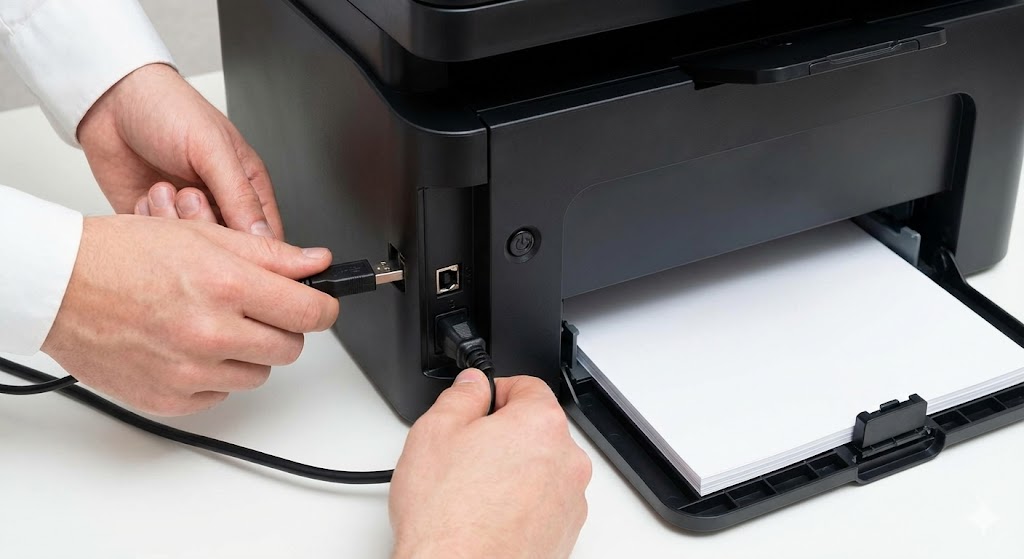
Before software can interact with the device, the following physical steps must be completed:
- Remove all orange protective tapes and spacers.
- Install ink cartridges or toner as per the internal markings.
- Load the paper tray with compatible media.
- Perform a "Power Cycle" by connecting the AC adapter.
2. Driver Installation Theory
A printer driver acts as a bridge between the operating system (OS) and the printer hardware. Without the correct driver, the OS cannot send print jobs correctly.
Standard Methods:
- Plug-and-Play (PnP): Windows/macOS automatically detects the device via USB.
- Full Feature Software: Downloaded from the manufacturer to include scanning and maintenance tools.
- Universal Print Drivers: Used in corporate environments for multiple models.
3. Wireless Configuration
Modern printers utilize the 802.11 b/g/n protocols. To connect a printer to Wi-Fi:
- Select the Wireless Setup Wizard on the printer control panel.
- Select your SSID (Network Name) from the list.
- Enter the WPA2/WPA3 Security Key.
Note: Most printers prefer the 2.4GHz band over 5GHz for better wall penetration.
4. Mobile & Cloud Printing
Handheld devices connect to printers using standardized protocols:
- AirPrint: Apple's protocol for iOS devices.
- Mopria: A standard for Android devices.
5. Preventive Maintenance
- Print Head Cleaning: Run the internal utility if streaks appear.
- Firmware Updates: Check for security and performance patches.
6. Common Troubleshooting
Printer is "Offline"
Ensure that "Use Printer Offline" is unchecked in your OS settings and check the SNMP status in Port settings.
7. Common Error Codes
| Code/Error | Meaning | Recommended Action |
|---|---|---|
| E0, E3 | Paper Jam | Check rear door and tray. |
| Check Ink | Cartridge Issue | Clean gold contacts with a cloth. |